NCJW Dallas Advocates Stand Up for Religious Freedom in Public Schools
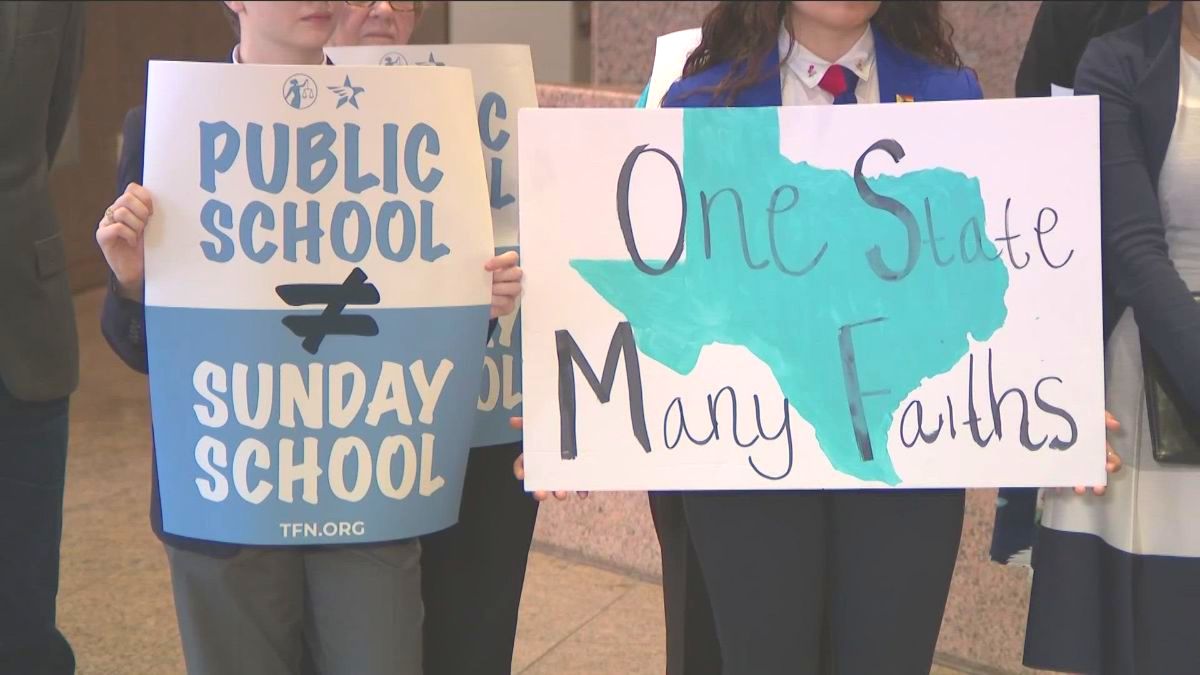
No Voice Is Too Soft: NCJW Dallas Advocates Stand Up for Religious Freedom in Public Schools
“Fight for the things that you care about but do it in a way that will lead others to join you.” — Ruth Bader Ginsburg
That is exactly what NCJW Dallas members and interfaith advocates did this month.
As Texas school districts faced a March 1st deadline to decide on how to implement SB 11, Andi, Robyn, Debra, and Terry showed up, spoke out, and helped lead others to join them.
WHAT IS SB 11?
SB 11 instructs public school districts in Texas to vote to set aside a designated period during the school day for prayer and Bible reading. Districts must opt in through a board vote, and they were required to decide before March 1 whether to implement these structured prayer periods.
Supporters describe it as voluntary and student-led. But here’s the key distinction: students already have the constitutional right to pray individually or in groups during non-instructional time. That freedom has long been protected. Ultimately, what SB 11 introduces is a school-structured, officially designated prayer time—something that raises serious concerns about church-state separation and student inclusion.
NORTH TEXAS SCHOOL DISTRICTS SAY NO
Your voice matters. In district after district across North Texas, trustees listened to their communities, rejecting the carving of prayer and Bible reading periods in their schools. Those decisions, however, didn’t happen in a vacuum. They happened because people like Andi, Robyn, Debra, and Terry showed up and because people of all faiths stood together.
COURAGE IS CONTAGIOUS
For Robyn, speaking at the school board meeting was a first. “I’d never done anything like that before, and I was nervous,” she shared.
The room was packed. Emotions were high, but when her turn came, Robyn stood up anyway. She calmly addressed the board. She thanked them for their time and introduced herself as a person of faith, a synagogue member in Dallas, a grandmother with family in that school district.
And then she made it personal:
“I want my granddaughter to be able to go to school and be herself. I want her to not feel left out, or ‘othered,’ when she doesn’t participate in a state-organized prayer time.”
With eloquence, Robyn reminded trustees that not all children pray the same way—or at all. An organized prayer period, even with opt-in or opt-out provisions, risks creating division.
“I want every child to feel included, regardless of their faith or lack thereof.”
Her closing was simple but strong:
“Please vote NO on SB 11, but preserve the freedom children already have to pray or not pray at school, as we teach them in our homes.”
After she finished, Robyn smiled, and people clapped loudly. As she walked back to her seat, several attendees told her, “Good job,” as an echo of what Justice Ginsburg meant: fighting for what you care about in a way that invites others in.
Momentum built. In the end, the trustees voted unanimously against SB 11.
WHY THIS MATTERS
Religious freedom protects everyone.
It protects students who pray.
It protects students who pray differently.
It protects students who do not pray at all.
It’s worth showing up for.
“We can’t just hope for a brighter day; we have to work for a brighter day.” — Dolly Parton.
That brighter day—one where every child feels safe and included in public school—requires participation. It requires courage in uncomfortable rooms. It requires steady, principled voices. And, as Janna Cachola reminds us, “No voice is too soft when that voice speaks for others.”